




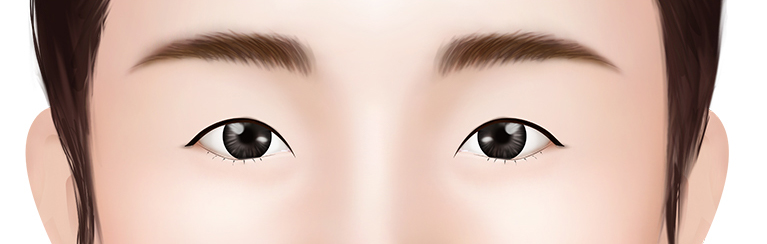















































Accurate assessment
Accurate assessment of eyelid skin and fat, eye shape, fold height and symmetry, and muscle condition is generally possible six months after the previous double-eyelid operation.
Complications such as bleeding, infection, and inflammation may occur after surgery, and individual satisfaction may vary. Please consult a doctor.
M Captured scr screenshot lize Your EYES-
Every patient needs a different method. Twenty years of safety principles and refined technique create naturally expressive eyes unique to you.
Accurate assessment
Accurate assessment of eyelid skin and fat, eye shape, fold height and symmetry, and muscle condition is generally possible six months after the previous double-eyelid operation.
Meticulous design
For more precise correction, the design is checked three times: during consultation, sitting in the operating room, and lying on the operating table.
Surgery by an experienced specialist
An eye-surgery specialist with over ten years of experience operates personally, with one-to-one anesthesiology care throughout.
Attentive postoperative care
Natural results and faster-than-expected reduction of redness, swelling and bruising are consistent comments from REAL patients.
Every patient needs a different method. Twenty years of safety principles and refined technique create naturally expressive eyes unique to you.
Accurate assessment of eyelid skin and fat, eye shape, fold height and symmetry, and muscle condition is generally possible six months after the previous double-eyelid operation.
For more precise correction, the design is checked three times: during consultation, sitting in the operating room, and lying on the operating table.
An eye-surgery specialist with over ten years of experience operates personally, with one-to-one anesthesiology care throughout.
Natural results and faster-than-expected reduction of redness, swelling and bruising are consistent comments from REAL patients.
Successful surgery =
Accurate diagnosis + an effective method
Plastic-surgery specialists experienced in eye revision
Small eyes thin skin
Small eyes thick skin
Eyes widely spaced
Upturned eyes
Tired-looking eyes
Double folds asymmetric
Multiple eyelid folds
Hollow eyes
Small eyes with thin skin
A simple procedure with limited swelling and scarring creates an attractive double-eyelid line.
Surgical method
Three to five approximately 1 mm micro-incisions are made in the upper lid. Non-absorbable sutures connect the tarsal plate or levator to the dermis to create the fold.
TIP!
Suture double-eyelid surgery works best when skin and muscle are thin or fat is limited. The correct method requires careful evaluation of fat, muscle, bone shape and skin type.
Successful surgery =
Accurate diagnosis + an effective method
Plastic-surgery specialists experienced in eye revision
Small eyes thin skin
Small eyes thick skin
Eyes widely spaced
Upturned eyes
Tired-looking eyes
Double folds asymmetric
Multiple eyelid folds
Hollow eyes
Small eyes with thick skin
Eyes with abundant fat and thick skin or muscle can look heavy and persistently puffy and require an experienced specialist. If only a small amount of fat needs removal, partial incision is recommended; when skin and muscle are thick, full incision can create a clear natural fold.
Surgical method
Partial-incision method
Make a 3–4 mm micro-incision along the designed fold → connect the levator to the dermis.
Full-incision method
Incise along the designed fold → remove excess fat, muscle, subcutaneous fat and skin → connect the levator directly to the dermis with non-absorbable sutures.
TIP!
Excessive removal can cause hollowness, multiple folds or larger scars, so an experienced specialist is essential.
Successful surgery =
Accurate diagnosis + an effective method
Plastic-surgery specialists experienced in eye revision
Small eyes thin skin
Small eyes thick skin
Eyes widely spaced
Upturned eyes
Tired-looking eyes
Double folds asymmetric
Multiple eyelid folds
Hollow eyes
Wide-set eyes
A prominent epicanthal fold often makes the eyes look far apart and can be partially opened with medial canthoplasty. When spacing is pronounced or has several causes, ptosis or double-eyelid correction may be combined; if canthoplasty is insufficient, nasal or other procedures may be considered.
Surgical method
Inner-corner skin is rearranged so the scar is hidden at the corner and lower lash line. It may be red while healing, then becomes almost unnoticeable after 2–3 months.
TIP!
Overcorrection can make the eyes look too close or expose too much tear-duct tissue. Surgery must balance the eyes with the whole face and requires experience.
Successful surgery =
Accurate diagnosis + an effective method
Plastic-surgery specialists experienced in eye revision
Small eyes thin skin
Small eyes thick skin
Eyes widely spaced
Upturned eyes
Tired-looking eyes
Double folds asymmetric
Multiple eyelid folds
Hollow eyes
Upturned eyes
Lateral canthoplasty or lower-lid lowering corrects the angle to suit the face. REAL uses minimal incisions to widen the eyes and create a gentler shape, and may extend a suitable double fold at the outer corner.
Surgical method
After incision, the upper lash line is extended toward the lower lid while preventing re-adhesion, naturally lengthening the lower lash line for greater depth. In selected cases the outer corner can be pulled outward while preserving its original shape.
TIP!
Canthoplasty and lower-lid lowering are delicate procedures that must account for bone, muscle and skin. Choose the ideal length and angle after thorough consultation with an experienced eye surgeon.
Successful surgery =
Accurate diagnosis + an effective method
Plastic-surgery specialists experienced in eye revision
Small eyes thin skin
Small eyes thick skin
Eyes widely spaced
Upturned eyes
Tired-looking eyes
Double folds asymmetric
Multiple eyelid folds
Hollow eyes
Tired-looking eyes
Because the eyelid-elevating muscle must be adjusted, this is demanding but can create a bright, satisfying result. Incisional or non-incisional correction is chosen according to skin, ptosis severity and lifting strength. Severe weakness, drooping or thick lids favor incision; mild weakness or thin lids favor non-incisional correction.
Surgical method
The levator and Müller's muscle are shortened by internal sutures behind the lid, strengthening elevation. No skin incision means no visible outer scar, less redness and bruising, and faster recovery. It can also naturally brighten eyes that remain tired after double-eyelid surgery.
TIP!
Controlling the amount of muscle adjustment is crucial. REAL specialists determine the ideal pupil exposure for each patient to create natural, expressive eyes.
Successful surgery =
Accurate diagnosis + an effective method
Plastic-surgery specialists experienced in eye revision
Small eyes thin skin
Small eyes thick skin
Eyes widely spaced
Upturned eyes
Tired-looking eyes
Double folds asymmetric
Multiple eyelid folds
Hollow eyes
Asymmetric double folds
Everyone has some asymmetry, but a large difference disrupts facial balance. Many factors can create unequal folds; identifying the cause and correct method is essential. If muscle strength differs, ptosis correction is needed.
TIP!
If only one eye has a fold, suture surgery on one side may be possible, but it can differ from the natural fold, so both sides are usually corrected together.
Successful surgery =
Accurate diagnosis + an effective method
Plastic-surgery specialists experienced in eye revision
Small eyes thin skin
Small eyes thick skin
Eyes widely spaced
Upturned eyes
Tired-looking eyes
Double folds asymmetric
Multiple eyelid folds
Hollow eyes
Multiple eyelid folds
Multiple folds are repeated lines formed by excess overlapping skin. Creating one fold at the correct position usually lets the extra lines disappear. The method depends on skin, orbital fat and desired shape.
Successful surgery =
Accurate diagnosis + an effective method
Plastic-surgery specialists experienced in eye revision
Small eyes thin skin
Small eyes thick skin
Eyes widely spaced
Upturned eyes
Tired-looking eyes
Double folds asymmetric
Multiple eyelid folds
Hollow eyes
Hollow eyes
Older methods transplanted a block of dermis and subcutaneous fat, but now minimally invasive autologous fat grafting is preferred. Mild hollowness may improve by repositioning upper-lid fat; severe cases respond better to fat taken from the thigh or abdomen.
TIP!
Results and scarring matter most to patients, so choose an experienced, skilled specialist and a method suited to your anatomy.
Successful surgery =
Plastic-surgery specialists experienced in eye revision
Small eyes with thin skin
A simple procedure with limited swelling and scarring creates an attractive double-eyelid line.
Surgical method
Three to five approximately 1 mm micro-incisions are made in the upper lid. Non-absorbable sutures connect the tarsal plate or levator to the dermis to create the fold.
TIP!
Suture double-eyelid surgery works best when skin and muscle are thin or fat is limited. The correct method requires careful evaluation of fat, muscle, bone shape and skin type.
Small eyes with thick skin
Eyes with abundant fat and thick skin or muscle can look heavy and persistently puffy and require an experienced specialist. If only a small amount of fat needs removal, partial incision is recommended; when skin and muscle are thick, full incision can create a clear natural fold.
Surgical method
Partial-incision method
Make a 3–4 mm micro-incision along the designed fold → connect the levator to the dermis.
Full-incision method
Incise along the designed fold → remove excess fat, muscle, subcutaneous fat and skin → connect the levator directly to the dermis with non-absorbable sutures.
TIP!
Excessive removal can cause hollowness, multiple folds or larger scars, so an experienced specialist is essential.
Wide-set eyes
A prominent epicanthal fold often makes the eyes look far apart and can be partially opened with medial canthoplasty. When spacing is pronounced or has several causes, ptosis or double-eyelid correction may be combined; if canthoplasty is insufficient, nasal or other procedures may be considered.
Surgical method
Inner-corner skin is rearranged so the scar is hidden at the corner and lower lash line. It may be red while healing, then becomes almost unnoticeable after 2–3 months.
TIP!
Overcorrection can make the eyes look too close or expose too much tear-duct tissue. Surgery must balance the eyes with the whole face and requires experience.
Upturned eyes
Lateral canthoplasty or lower-lid lowering corrects the angle to suit the face. REAL uses minimal incisions to widen the eyes and create a gentler shape, and may extend a suitable double fold at the outer corner.
Surgical method
After incision, the upper lash line is extended toward the lower lid while preventing re-adhesion, naturally lengthening the lower lash line for greater depth. In selected cases the outer corner can be pulled outward while preserving its original shape.
TIP!
Canthoplasty and lower-lid lowering are delicate procedures that must account for bone, muscle and skin. Choose the ideal length and angle after thorough consultation with an experienced eye surgeon.
Tired-looking eyes
Because the eyelid-elevating muscle must be adjusted, this is demanding but can create a bright, satisfying result. Incisional or non-incisional correction is chosen according to skin, ptosis severity and lifting strength. Severe weakness, drooping or thick lids favor incision; mild weakness or thin lids favor non-incisional correction.
Surgical method
The levator and Müller's muscle are shortened by internal sutures behind the lid, strengthening elevation. No skin incision means no visible outer scar, less redness and bruising, and faster recovery. It can also naturally brighten eyes that remain tired after double-eyelid surgery.
TIP!
Controlling the amount of muscle adjustment is crucial. REAL specialists determine the ideal pupil exposure for each patient to create natural, expressive eyes.
Asymmetric double folds
Everyone has some asymmetry, but a large difference disrupts facial balance. Many factors can create unequal folds; identifying the cause and correct method is essential. If muscle strength differs, ptosis correction is needed.
TIP!
If only one eye has a fold, suture surgery on one side may be possible, but it can differ from the natural fold, so both sides are usually corrected together.
Multiple eyelid folds
Multiple folds are repeated lines formed by excess overlapping skin. Creating one fold at the correct position usually lets the extra lines disappear. The method depends on skin, orbital fat and desired shape.
Hollow eyes
Older methods transplanted a block of dermis and subcutaneous fat, but now minimally invasive autologous fat grafting is preferred. Mild hollowness may improve by repositioning upper-lid fat; severe cases respond better to fat taken from the thigh or abdomen.
TIP!
Results and scarring matter most to patients, so choose an experienced, skilled specialist and a method suited to your anatomy.
See REAL eye surgery details
An ideal 3:2:3 balanced body curve
A flat, square buttock lacking upper fullness can look sagging. Even consistent squats may not improve its contour. REAL buttock surgery creates a fuller, firmer lifted shape and a confident silhouette.
Double-eyelid Surgery
Advanced regenerative techniques precisely activate the cells' repair potential, support deeper metabolism of melanin deposits, and address dull, uneven tone at its source. Alongside brightening care, collagen support is remodeled to promote clear radiance and a firmer, smoother appearance.
Eye-shape correction
High-frequency ultrasound energy creates an effective pathway for skin absorption, delivering a concentrated vitamin complex into the dermal layer without needle puncture for deeper nourishment. It supports facial contours while revitalizing dehydrated, tired skin for an immediately firmer and naturally replenished look.
Technology and experience elevated to a new level
Surgical specialists
Specialists
Specialists
Specialists
Specialists
Specialists
Specialists
REAL medical team
Specialists
Specialists
Specialists
Specialists
Specialists
REAL medical team
Dermatology specialist — REAL clinic
Specialists
Specialists
Specialists
Specialists
Specialists
Specialists
Specialists
Specialists
REAL medical team
Dermatology specialist — AMAN clinic
Specialists
Specialists
Specialists
Specialists
Specialists
Specialists
REAL medical team
Dermatology specialist — REGAL clinic
Specialists
Specialists
Specialists
Specialists
Specialists
Specialists
Specialists
REAL medical team
Surgical specialists
Specialists
Specialists
Specialists
Specialists
Specialists
Specialists
Specialists
Specialists
Specialists
Specialists
Specialists
Dermatology specialist — REAL clinic
Specialists
Specialists
Specialists
Specialists
Specialists
Specialists
Specialists
Specialists
Dermatology specialist — AMAN clinic
Specialists
Specialists
Specialists
Specialists
Specialists
Specialists
Dermatology specialist — REGAL clinic
Specialists
Specialists
Specialists
Specialists
Specialists
Specialists
Specialists
01
Eye-surgery specialists with over 20 years of experience
02
REAL results Proportion of referred eye-surgery patients
03
REAL results High satisfaction with surgical outcomes
REAL reveals the secret through the eyes
Q&A
If horizontal eye length is already sufficient, double-eyelid or ptosis correction may create a brighter look. The method depends on individual anatomy and preference, so accurate diagnosis is required.
It leaves more scarring than other methods, but it is usually barely visible after about two months.
The patient must open the eyes during surgery so the line and opening can be checked, therefore local anesthesia is used. To reduce injection discomfort, local anesthesia is given after light sleep sedation.
Swelling can cause apparent asymmetry during the first month and usually improves. If it remains after two months, revision may be needed.
Eye makeup and contact lenses can generally resume two weeks after eye surgery; avoid force when inserting lenses. Ophthalmic surgery should be separated from this procedure by about two months.
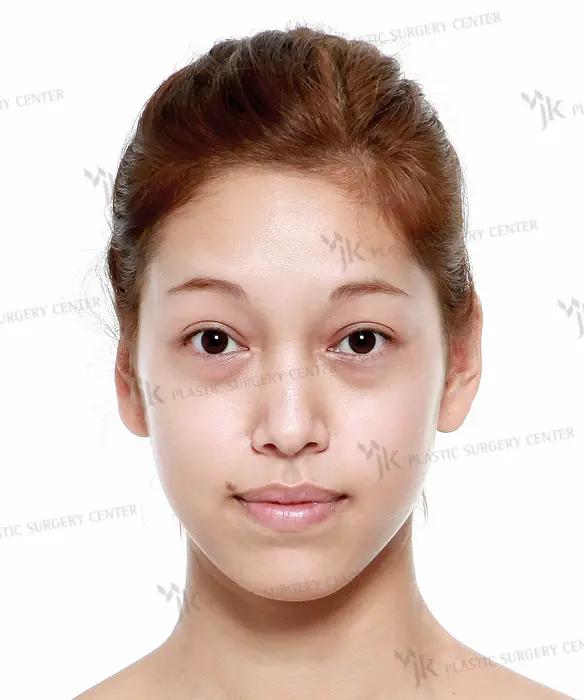
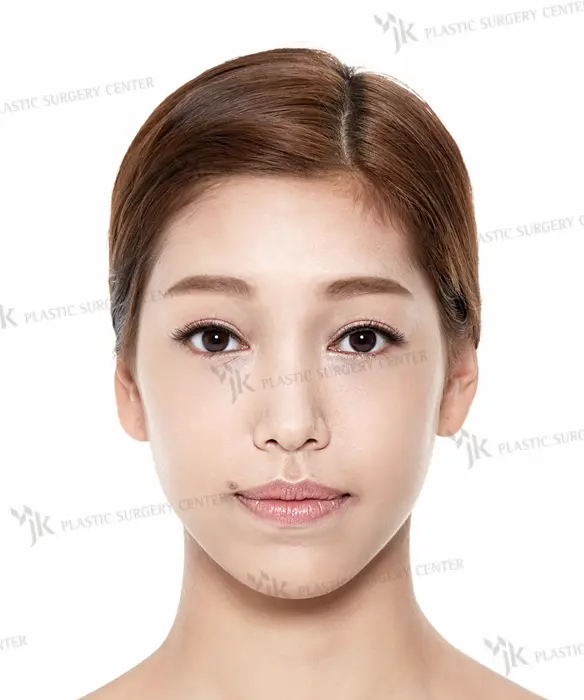
Eye surgery before-and-after photos
Real Eye Surgery Cases
Unretouched images of patients who underwent eye surgery at K
If you are being treated or taking medication for high blood pressure, heart disease, diabetes, or a thyroid condition, inform your coordinator in advance.
Stop smoking before surgery because cigarettes can trigger phlegm, sneezing, and postoperative bleeding.
Observe the required fasting period before surgery.
Contact lenses, jewelry, nail products, and similar items may interfere with surgery, so remove them beforehand.
Wear comfortable clothing that will not irritate the surgical area when you come to the hospital.
You may be unable to drive after surgery.